
How to Search Civil Dockets
Indiana MyCase is the public search layer for a Gibson County civil docket. The county runs no separate database of its own. Know a cause number? Choose Case. A person or business name works through Name, and Attorney covers bar numbers and lawyer names. After setting Court to Gibson County, pick Civil, Family, or Probate when a category would narrow things. Gibson’s official docket courts are county courts, so the menu lists no Princeton or Oakland City civil court.
A complete case number gives the cleanest result. For names, begin with the last name or the exact business name, then add a first name, status, or file-date limit only if the list runs long. Birth date can narrow a person result, but it is not displayed, and it may screen out civil cases that carry none. The state search tips cover wildcard and Sounds-like behavior.
- Open MyCase and select Case, Name, or Attorney.
- Choose Gibson County in the Court menu.
- Select Civil, Family, or Probate only when the case type is known.
- Match court, case type, filing date, status, and parties.
- Open Case Events, then request official or absent documents from the Clerk.
A party-name match alone can mislead, since common names pull in unrelated results. The public display also is not the official record.
Gibson Civil Docket Categories
MyCase sorts civil records into Civil, Family, and Probate filters, yet the type code is the more exact local route. Collection and eviction matters generally head toward Superior, while estates and guardianships point to Circuit. Family work is split by the local plan. The magistrate hears assigned domestic, small-claims, collection, and eviction matters. No separate public docket database is created.
The MyCase public interface lays out the search modes. It also carries the category choices used for Gibson County civil dockets.
| Search category | Useful Gibson types | Search clue |
|---|---|---|
| Civil | CC, CT, PL, EV, MF, MI, SC | Party, business, or case number |
| Family | DC, DN, DR | Party name or cause number |
| Probate | ES, EU, EM, GU, TR | Estate, protected person, or case number |
A category is a filter, never a ruling on access. A case can be public while its family, financial, medical, or identifying documents stay restricted.
Gibson County Civil Number Route
A Gibson cause number tells you Circuit or Superior. It does so before the event history even opens. 26C01 marks Circuit and 26D01 marks Superior. The case-type segment then splits collection, eviction, family, probate, small claims, and other civil work apart.
Give the Clerk the complete current number on any request. If MyCase shows a legacy cross-reference, add that older number too. That way converted paper and scanned records can be matched.
What a Civil Docket Shows
Consider one anonymized Gibson Superior miscellaneous-civil summary. It held the case identity, a decided status, party roles, a legacy cross-reference, financial and access containers, and a chronology. Each event object could carry an event type and date, judge and time, docket comment, document links, page metadata, and a setting label. Converted events can sit beside later scanning activity. That means an older Gibson County civil docket may not read like one smooth narrative.
| Case Number | Shows county, court, filing month, civil type, and sequence, such as 26D01-YYYYMM-MI-####. |
|---|---|
| Parties | Identifies public roles such as plaintiff, defendant, petitioner, or respondent. |
| Case Events | Lists filings, service, clerk actions, motions, settings, and orders. |
| Documents | May link a public image, though many events have no downloadable file. |
| Status | States a system status and date, which should be read with the latest order. |
| Cross-reference | Can connect an older or converted number to the current case. |
Party role says nothing about who prevailed. In the same way, a docket comment can describe an event without reproducing the filed paper, so ask the Clerk for the complete or certified court record.
Gibson Civil Docket Allocation
The local allocation plan sets the split. Superior handles civil collection, tort, plenary, eviction, mortgage foreclosure, miscellaneous civil, tax deed, tax sale, and small claims. Circuit holds estates and trusts, guardianships, and adoptions. Juvenile cases, mental-health cases, and part of the family docket sit there as well. Superior takes its listed family share. Miscellaneous civil may be filed in either court, at the filer’s choice, under the plan.
The official Gibson Superior Court page comes straight from the county and covers the court handling that broad listed civil range.
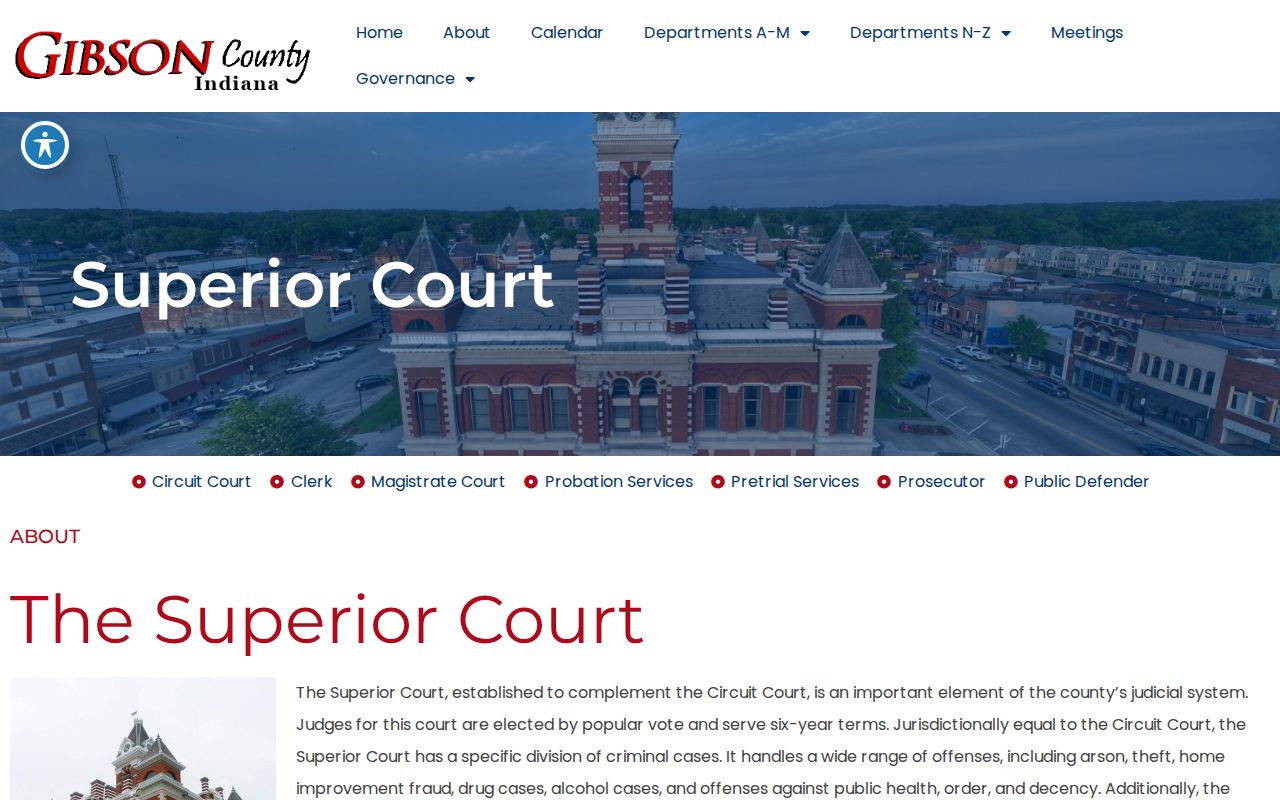
That official page ties the online 26D01 label to the local institution itself. Even so, read the case code rather than assuming every civil matter sits in Superior.
Types of Civil Cases on the Docket
Gibson County civil dockets run from routine money claims to highly protected personal matters. Together, the court code and case-type code show the assigned court. Access swings sharply across the list. An ordinary collection may expose more public documents. An adoption, juvenile, mental-health, or protected family matter shows far less.
- CC, CT, and PL: civil collection, tort, and plenary matters.
- EV, MF, TP, and TS: eviction, mortgage foreclosure, tax deed, and tax sale.
- SC: small claims assigned to Superior and often heard by the magistrate.
- DC, DN, and DR: domestic-relations and family cases divided by local rule.
- ES, EU, EM, GU, and TR: estate, guardianship, and trust matters held by Circuit.
- AD and related protected types: adoption and other categories with strict access limits.
One courthouse shares space with all these paths. That does not make them a single undifferentiated civil docket.
Gibson Small Claims Docket
The Gibson Clerk courts page sets a general small-claims limit of $10,000. A corporation tops out at $6,000 and must file a corporate resolution form. File the action where the transaction or action occurred. Published starting costs are $97 for one defendant. E-filing drops that to $87. Each extra defendant adds $10. Sheriff service runs $28, and post-judgment sheriff service adds another $28. Confirm the figures before filing, since costs can change.
Small claims carry the SC type. They belong in Gibson Superior, with assigned work heard by the magistrate. A case summary can show party roles, service, and hearing events. It can also show judgment activity and later enforcement entries. It is not the claim form itself.
| Local item | Published amount or limit |
|---|---|
| General claim limit | $10,000 |
| Corporation claim limit | $6,000 |
| Start with one defendant | $97, or $87 if e-filed |
| Each extra defendant | $10 |
| Sheriff service | $28 |
Note: These are filing and service figures, not copy fees. Gibson publishes no local plain-copy or certification price.
Settings and Hearings on Civil Dockets
On a Gibson County civil docket, an entry marked HEARING or PRE-TRIAL may carry a date, an optional time, the judge, and a docket comment. Reschedule text is added later. Courtroom details are not always filled in. The county also offers no date-by-date calendar portal for civil settings. So read the newest Case Events first. Then confirm the current setting with the court named in the case summary, because later entries can vacate, continue, reset, or reschedule an earlier date. A case can even show a decided status while post-judgment activity keeps appearing. Gibson Circuit answers at 812-385-4885. Superior is 812-386-6237, and the magistrate is reached through Circuit at extension 1. The Clerk can be reached at 812-386-6474. The Gibson County court calendar walks through the setting-verification path in more depth.
Civil docket flow: Filing › Service › Response › Motions › Hearing or Trial › Order › Judgment Activity
Gibson County Civil Copy Choice
Plain copies simply reproduce a document from the file. Certified copies add the Clerk’s official seal. Another court or agency may want it as proof. Gibson posts no general local price list for either one, so ask the office for the current charge and delivery method before you mail payment. Transcript requests go elsewhere: direct those to the court reporter.
Gibson Civil Docket Filing Routes
Gibson County publishes local packets for divorce, protective orders, and small claims. Divorce filings are accepted from 8 a.m. to 3 p.m. The county lists a $177 court cost plus a possible $28 sheriff service fee. Protective-order petitioners must appear in person. The county charges no court cost for that filing. It also requires a packet that keeps confidential information apart from the public filing. Each of these procedures generates docket events, though none of them are record-copy forms.
Attorneys must e-file in Gibson County through Indiana’s statewide e-filing system. People without lawyers are generally encouraged to e-file. But they are not broadly required to. Keep filing notifications and public MyCase events separate in your mind. An email receipt never proves that an attached paper is public or certified.
After-hours filing issue: The local public counter window for divorce and protective-order filings ends at 3 p.m. Contact the Clerk about the correct filing route rather than assuming a late counter delivery will be accepted.
Gibson County Civil Counter Access
Sitting at a counter still matters for a Gibson County civil docket. Indiana’s document-availability table permits broader in-person access to some non-confidential papers. The public download view supplies less. So ask by name for a specific pleading, order, decree, or judgment. Give the event date. A focused request lets the Clerk check redaction and access status rather than reading a missing online image as a sealed file.
Public Access to Civil Dockets
Indiana starts from a simple premise: court records are open. Indiana Access Rule 4 presumes public access. What you can see from home differs from what the counter offers, though. A Gibson County civil docket online may list the parties and each case event. Pleadings, exhibits, financial attachments, and protected family content stay off the screen. You would need to request those at the clerk's office.
Access Rule 5 then draws the hard lines. It strips confidential identifiers. Juvenile, adoption, mental-health, medical, and similar protected records stay out of view. The state court access rule spells out that split between open dockets and sealed material.
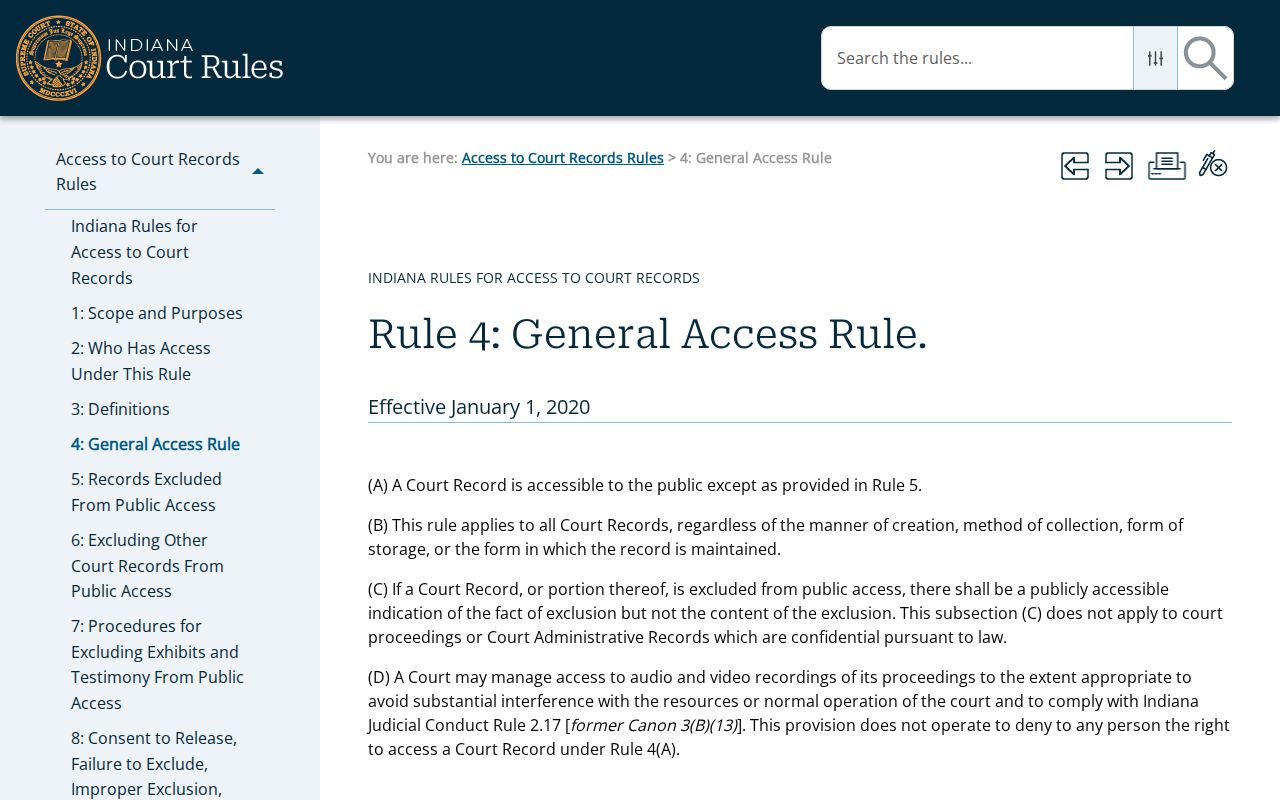
The rule reflects one central access point: an open civil case does not make every document available remotely.
Key Rules:
Indiana Access Rule 4 establishes general court-record access.
Indiana Access Rule 5 protects excluded and confidential information.
Indiana Code 5-14-3-3 supports reasonably particular requests for inspection or copying, subject to court-record rules.
Request Gibson Civil Docket Records
A missing civil document can simply reflect an online limit. It does not mean the case is sealed. Indiana’s document table puts some civil orders and selected papers online. Broader non-confidential access waits at the clerk counter. For a decree, an estate paper, a judgment, or any other case document, the state request guidance sends the requester to the county clerk. A transcript is the exception. That comes from the court reporter. The state request guidance explains the clerk route for court records in detail.
The request path works alongside MyCase. Search first to capture the exact court and case number, then describe the document you want, the date range, and the copy type.
Gibson County Clerk
101 N. Main St.
Princeton, IN 47670
812-386-6474
clerk@gibsoncounty-in.gov
Monday-Friday, 8 a.m.-4 p.m.
Gibson publishes no generic document-order form and no county copy-price schedule. Call and ask for the current plain-copy or certification amount, the delivery options, and the accepted payment method. In your request, state Gibson Circuit or Superior, the cause number, the record sought, and whether you need inspection, a plain copy, or a certified copy.