
How to Search Criminal Dockets
Indiana MyCase is the public Odyssey window for a Gibson County criminal docket. It covers public, non-confidential case information from Gibson Circuit and Gibson Superior. Gibson County runs no separate criminal database. Pick the Case, Name, or Attorney tab. From there, choose Gibson County in the Court menu and select Criminal & Citation when that filter helps. A case number works best. A name, citation number, or attorney can also reach a matching criminal court record.
MyCase results are not certified records. Keep the exact court and case number from what you find. A paper notice may show an old number. Try both old and current numbers. Transferred or converted criminal cases can keep cross-references. The official search tips suggest dropping an overly narrow date or status filter when a known case fails to appear.
- Open MyCase and choose Case, Name, or Attorney.
- Set Court to Gibson County and select Criminal & Citation if needed.
- Enter the full case number, citation number, or a focused name search.
- Match the court, type, file date, and status before opening the summary.
- Read the latest events, then ask the Clerk for unavailable or official documents.
Expect a CAPTCHA sometimes, and broad result sets are capped. Neither limit means a Gibson County criminal docket was removed.
Gibson Criminal Docket Codes
An Indiana case number routes a file to the right place. Under Administrative Rule 8, it carries a court identifier, a year-and-month block, a case-type code, and a sequence. A Gibson Circuit felony might look like 26C01-YYYYMM-F6-####. A Gibson Superior misdemeanor might look like 26D01-YYYYMM-CM-####. Those are patterns, not real cases.
The first two digits flag Gibson County. C means Circuit; D means Superior. Older converted files can keep former felony codes, so trust the latest label and the event chronology over any guess from one old abbreviation.
- CM
- Criminal misdemeanor.
- F1 through F6
- Indiana felony levels.
- MR
- Murder case type.
- PC
- Post-conviction proceeding.
- Converted Event
- An entry brought forward from a prior record system.
Note: Gibson County publishes no glossary for every event abbreviation; check the final order or ask the Clerk about unclear wording.
Gibson County Criminal Record Route
One elected Clerk serves both Gibson Circuit and Gibson Superior. That makes the court code the key routing fact. A request marked only "criminal case" can be too broad. Include 26C01 or 26D01. Add the filing month, type code, and sequence when you know them.
That detail matters for older converted matters too. A legacy cross-reference may sit in the summary. The current cause number controls the active file. Give the Clerk both numbers whenever the paper notice and the MyCase result disagree.
What a Criminal Docket Shows
A Gibson County criminal case summary can list the court, county code, case type, file date, status, caption, and public access indicators. Criminal records go further, adding charges, citation data, statutes, offense dates, degree, bonds, parties, attorneys, and Case Events. Each event may carry a date, an optional time, a judge field, a description, a docket comment, page data, and a document link when one is public.
| Case Number | Identifies Gibson Circuit or Superior, filing month, criminal type, and sequence. |
|---|---|
| Charges | May list count, statute, degree, citation, and key dates. |
| Case Events | Shows filings, clerk acts, settings, orders, and converted history. |
| Setting | May show a date, time, judge, and calendar label. |
| Status | A system label that must be read with the latest order. |
| Disposition | May appear through final event text or a sentencing order. |
A docket comment is not the underlying pleading, and financial data may trail later activity. The MyCase help page sends users to the Clerk for the official record and current financial facts.
Gibson Criminal Docket Allocation
The Gibson local allocation plan splits the general criminal pool between Circuit and Superior. Felony and misdemeanor filings split down the middle. Half go to each court. Circuit also takes its share of murder, life-without-parole, and post-conviction matters. Superior receives its share plus serious Title 9 traffic felonies and misdemeanors. It also handles all infractions and ordinance violations. Later charges and probation matters usually stay with the first court.
The official Gibson Circuit Court page documents the local court behind identifier 26C01. It supplies the county court view below.
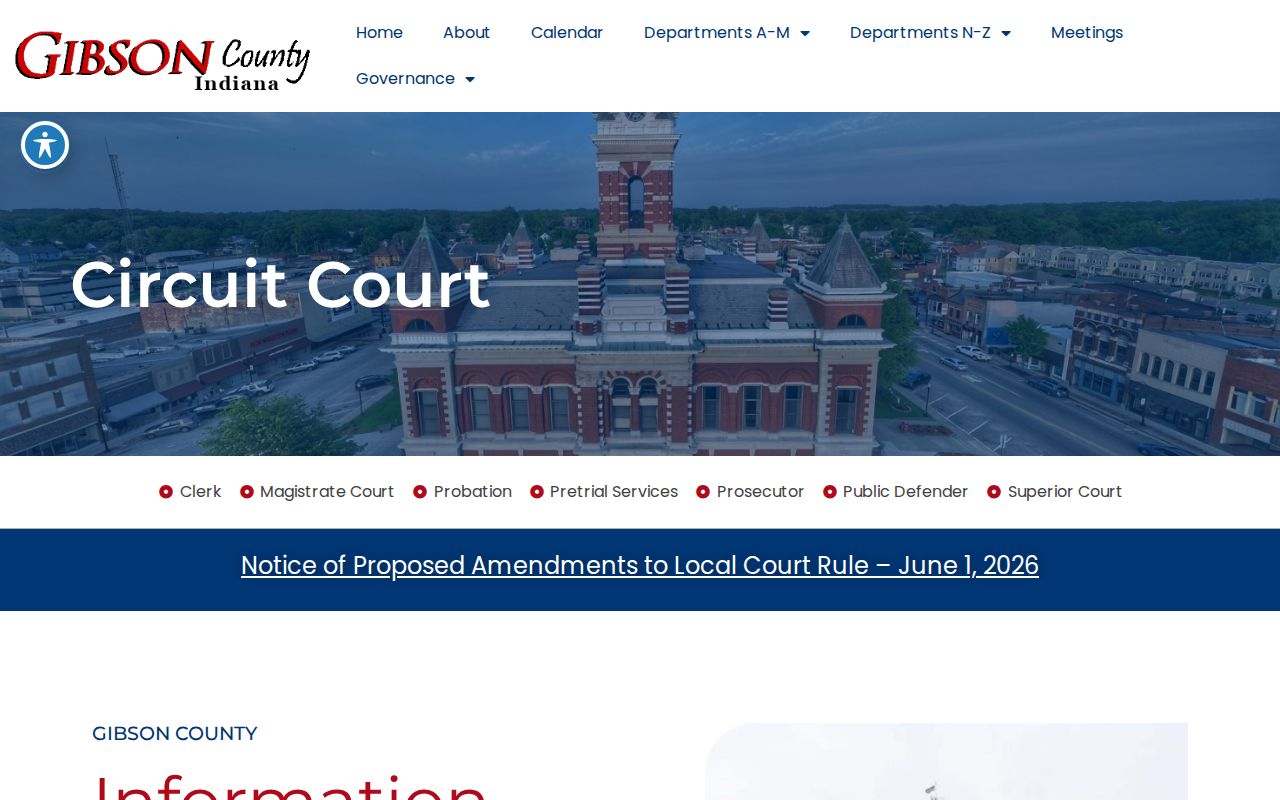
That is why the court code belongs with any result. Both trial courts serve Gibson County, yet the official file stays tied to the named court.
Stages on a Criminal Docket
A Gibson County criminal docket builds as the case moves. Filing sets the court and case type. Initial appearance or arraignment can follow. Bond entries, pretrial settings, motions, plea activity, trial events, sentencing, and later supervision or appeal entries may come next. Not every case uses every phase. A plea may avoid trial. A later order may replace an earlier setting.
Docket flow: Filing › Arraignment › Pretrial › Plea or Trial › Disposition › Sentencing
Read from the oldest event to the newest, but lean on the latest event for the current setting. A decided status does not prove each charge ended the same way, so compare charges, final event wording, and the sentencing order. The Gibson County case search offers more help with narrowing a result.
Gibson Dockets and Supervision Records
A public criminal event is one thing. A supervision file is another. Gibson local rules mention Substance Abuse Treatment Court and problem-solving services. A referral or order can show up on the Gibson County criminal docket. Related medical, risk, or program supervision data is different. It may stay confidential under Indiana rules.
The Gibson County Probation Department page identifies the local service office. It is not a second criminal docket search.
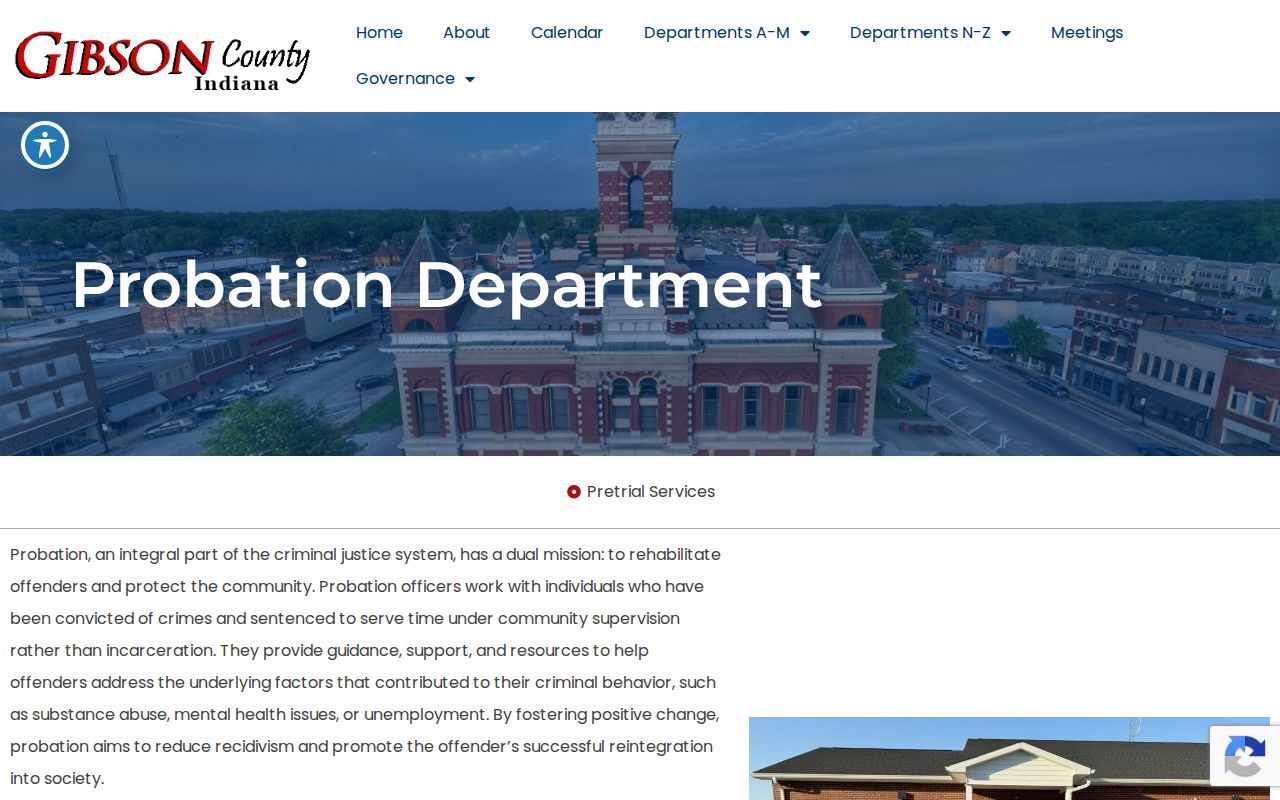
Here is the point to take away. An order for a public program stays public, but the probation and treatment notes behind it stay out of the Gibson County criminal docket.
Key point: Use MyCase for court chronology and the Clerk for the court file. A supervision office is not the public records counter.
Gibson County Criminal Setting Check
A Gibson County criminal docket lists settings for arraignment, pretrial conferences, pleas, trials, sentencing, and review. Check the newest event before any other. A later order can vacate or reset an earlier date, so the bottom of the docket controls what a mid-list hearing date really means. Judge and time fields often show up even when a full room location does not.
Want to confirm a live setting? Call the court named in the result. Circuit lists 812-385-4885, and Superior lists 812-386-6237. The Clerk can help identify the file, but the assigned court holds the current appearance details.
Which Court Holds Criminal Dockets
Read the Court field, not the courthouse floor. Gibson Circuit carries case numbers under 26C01. Gibson Superior uses 26D01. Both courts run Odyssey. They appear under the same Gibson County choice in MyCase. One elected Gibson County Clerk keeps the petitions, motions, and orders for both. Gibson County has no separate Princeton, Oakland City, or other municipal criminal docket.
Call the named court with a question about a live setting. Circuit lists 812-385-4885, and Superior lists 812-386-6237. For records, the Gibson County Clerk is the fallback. Reach the office at 812-386-6474, clerk@gibsoncounty-in.gov, or the Gibson County Courthouse, 101 N. Main St., Princeton, Indiana 47670. Counter hours run Monday through Friday, 8 a.m. to 4 p.m.
Gibson County Clerk
101 N. Main St.
Princeton, IN 47670
812-386-6474
clerk@gibsoncounty-in.gov
Monday-Friday, 8 a.m.-4 p.m.
Official Gibson Criminal Docket Copies
Need the official file? Go through the Clerk. Indiana’s record request guidance routes case document requests to the clerk of the court where the matter was heard. A transcript is a separate animal and goes to the court reporter instead. Gibson takes requests by phone, email, mail, and at the counter. A requester can start through any channel and ask about delivery options.
Name the court, Gibson Circuit or Gibson Superior. Give the cause number if you have it, the event or document wanted, the date range, and whether you want inspection, a plain copy, or certification. Mention it if MyCase shows the case but not the item. The Clerk can then say where the document sits. It may be at the counter, restricted, held on paper, or belong to another officer.
Missing Gibson Criminal Docket Documents
A charge or event can be public even when its pleading is not online. Indiana’s document access table covers felony and misdemeanor matters. It says online public access there is often limited to sentencing orders. Other non-confidential material may still be open in person. A missing link can mean an old paper file, redaction, or a document-type limit. It does not prove sealing.
Ask the Clerk for a specific item. Give the court, case number, document type, date range, event name, and whether you want a plain or certified copy. Gibson publishes no dedicated criminal-record order form or local copy-price schedule. Confirm the cost and delivery method before paying.
Note: A MyCase printout can identify the file. It does not replace a certified criminal court record from the Gibson County Clerk.
Gibson County Criminal Document Limits
Indiana’s public-document table draws a line between the case summary and downloadable filings. In felony and misdemeanor cases, remote public documents are often limited to sentencing orders. Other non-confidential records may still be inspected through the Clerk in person.
Do not read that gap as proof of sealing. First pin down the event and its date. Then ask the Clerk about the item. It may be public at the counter, need redaction, never have been scanned, or fall under an Access Rule 5 exclusion.
Public Access and Sealed Criminal Dockets
Indiana opens court records first and applies exclusions after. Access Rule 4 treats court records as generally open. Another rule, law, or order must restrict them. MyCase access can be narrower than what the counter allows. Rule 5 shields juvenile, mental-health, adoption, confidential identifiers, victim details, medical data, presentence material, supervision records, and expungement material. Those are not the only categories.
The Indiana confidential-record rule explains the split. A Gibson County criminal docket can stay visible while a single field or document does not.
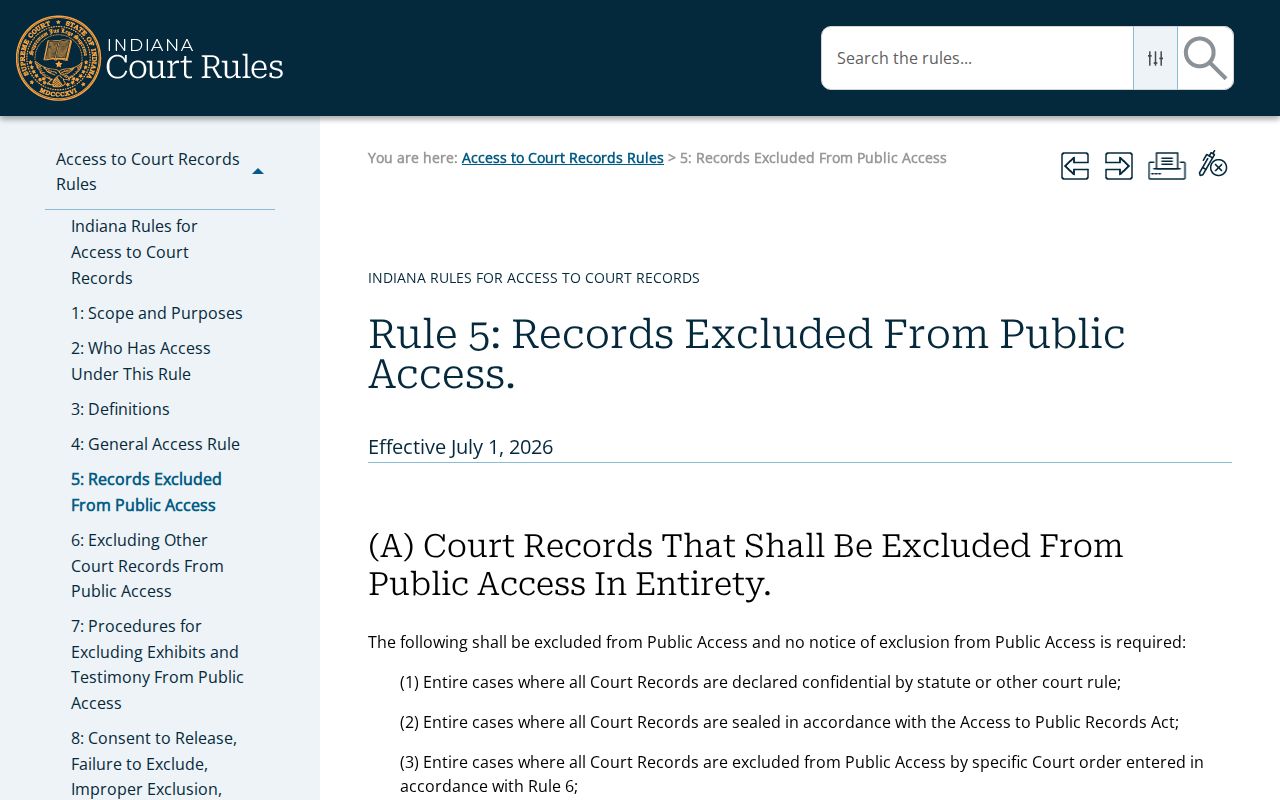
Use the public chronology with care. Withheld supervision, medical, identifying, or sealed content does not belong in the open file, and the rule makes that boundary clear.
Key Rules:
Indiana Access Rule 4 sets the general presumption of access.
Indiana Access Rule 5 lists confidential information.
Indiana Code 5-14-3-5.5 works with court rules when records are sealed.